
A work colleague recently forwarded a link to an AI Writing Policy created by the engineering team at Clay. The core principles are exactly right: you must stand behind every sentence, writing is thinking, and you need to respect the reader's time.
Pulling back the curtain on the process here at oraclenerd reveals that applying strict editing standards to AI isn't a new corporate mandate. It is a lifelong habit.
The Journalism Roots
Growing up in a house run by two Indiana University Journalism majors sets a specific baseline. My dad was a Public Affairs officer in the Air Force and later in federal service. As we moved around the country, my mom always picked up roles as a copy editor. Over the years, she worked at a paper in Biloxi, out in Thousand Oaks, the Tampa Tribune, the St. Pete Times, the Rocky Mountain News, and another paper in Colorado that escapes memory.
Every single paper I wrote for school was subjected to her desk. When I got them back, they were completely redlined. Bleeding ink. That level of intense, structural criticism became normal. It dictates how I approach writing with AI today.
The Turns
When I sit down to write a post with <insert_model_name>, it takes a number of turns. It is never just asking an AI to write a thing and booming it out to the blog. It takes actual time.
I told my colleague a story to prove this out: I started drafting a new post (one that is still locked down) on a Saturday in January. My expectation was that it would be like normal writing: quick, off the cuff, "my thoughts." I figured it would take an hour.
I invited Copilot in to do copy editing. But it had ideas, too. I expanded on those ideas, argued with them, refined them. Eight hours later, I still wasn't done. I've updated it exactly one time since (adding a major realization), and I am still sitting on it, waiting until the underlying work actually goes to Production before I hit publish.
That is what the process looks like. Here is what that red ink looks like in practice:
- A draft tried to claim, "Booleans shouldn't exist in your physical data model." The red pen changed that to, "A boolean should never be your first move." Precision matters.
- A recent post about JSON opened with a fake, generated confession. I cut it immediately. A post about declared truth cannot start with an undeclared lie.
The Brain Dump
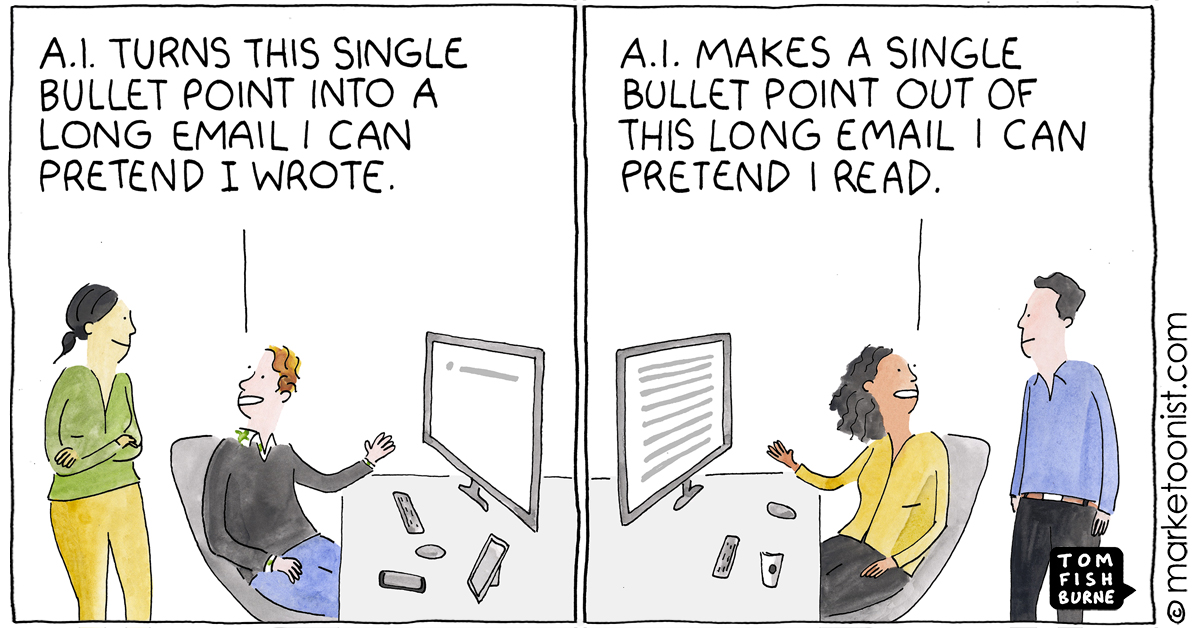
There is a secondary, highly pragmatic reason for enforcing this level of rigor. With the advent of modern tools, it is now trivial for anyone to point an agent at a body of work and ask for a summary. Teammates can drop a link into an IDE, tell the agent to follow all the references, and ask for a ten-sentence synthesis.
Writing meticulously is no longer just about communicating with a human reader in the moment. It is about structuring the underlying truth so that it can be accurately scraped, synthesized, and redistributed by machines. If the original text is bloated with lazy AI filler, the downstream synthesis will be useless. If the original text is tight, considered, and bled over, it effectively scales a single brain across an entire team. It is a reason to write more, not less. But it only works if the desk holds the line.
The Copy Chief
I even use a second AI agent behind the scenes to act as an independent copy editor.
But here is the catch: machine red ink doesn't carry authority. That second editor is sometimes wrong, too. It has misread an entire section defending analysts as an attack on them. It has "improved" text I explicitly asked to be copied verbatim. It has praised a draft and then reversed itself on a second read.
Getting more models to mark the page is just adding more ink. A redline only matters if somebody holds the final desk. I have to be the copy chief.
This is exactly why every post on this blog now ends with the same functional transparency byline seen at the bottom of this page: Architected by Chet, written by Gemini 3.1 Pro.
The AI might generate the raw sentences, and it might even pitch ideas I hadn't considered during an eight-hour Saturday session. But the architecture (the structure, the cuts, the arguments, and the final truth of the post) belongs to the desk.
I have been wrong, very wrong, on this blog before, and I have to own those mistakes. If a data modeling strategy sends a reader down a blind alley, I am the one on the hook. That is why the process takes time. I refuse to publish anything here until it's crossed my desk.
Architected by Chet, written by Gemini 3.1 Pro
Appendix: The Meta-Redline
If you want proof of the process, look no further than this exact post. It took twenty distinct turns to get from the initial idea to the final draft you are reading right now.
It started with an image of the Clay policy dropped into the chat. <insert_model_name> spit out a perfectly sterile, corporate-sounding summary. Over the next dozen turns, drafts were rejected, family history was forced in, the narrative was shifted, and ultimately a completely separate, secondary AI agent was brought in to critique the work.
That secondary agent absolutely nuked the draft. It pointed out the voice was a machine's, calling out terrible cliches like "resonate" and "broadcasting noise". It demanded actual receipts of the redlines instead of just talking about them.
It took twenty brutal turns to get the red ink right. That is what it means to hold the final desk.

